

On Friday, September 26, the Mack Institute, in partnership with EVERSANA, AWS and Modus Create, hosted Disrupting the Life Sciences Commercial Model: Exploring the Future Impact of AI and Patient-Centric Healthcare. This intimate event brought together senior executives from pharma and medtech with Wharton and Penn faculty to explore how AI, digital health and direct-to-patient models are transforming how therapies are marketed, delivered and supported.
Eversana has produced a report summarizing the day’s findings. Read it here.
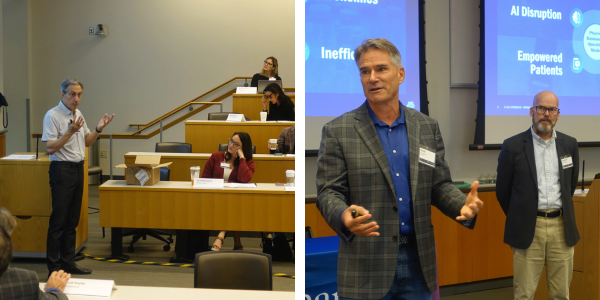
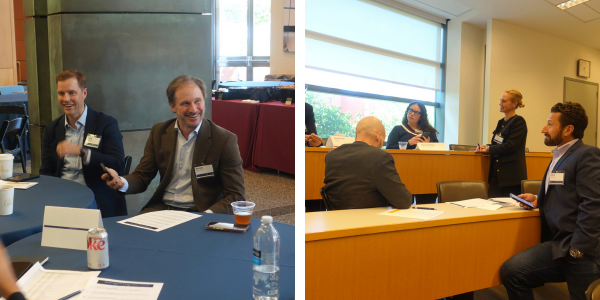
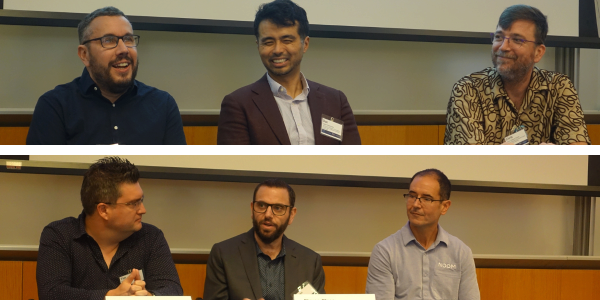
Through panel discussions featuring companies like Amazon Pharmacy, Roche, Noom, and GSK—plus a small-group forecasting exercise—participants crafted their own versions of “AI 2027,” imagining how the next few years could reshape the life sciences landscape. Several key themes emerged:
AI is moving fast in R&D—but commercial models need to catch up. While 60–100 AI-powered assets are already in clinical trials, commercial adoption is still in its early stages. The opportunity is massive but requires new approaches to patient engagement, market access, and field force strategy.
Patients are becoming empowered consumers. From direct-to-patient initiatives like LillyDirect to AI-powered health apps serving hundreds of millions in China, expectations for convenience, transparency, and personalization in health care are rising quickly.
Efficiency isn’t enough—we need reinvention. Copilot-style tools may deliver 10–15% productivity gains, but true transformation will come from reimagining workflows, business models, and even organizational structures around AI.
Forecasting the future is critical. In a fast-moving and hype-driven space like AI, structured foresight helps organizations avoid chasing every new trend. Techniques such as prediction markets, scenario planning, and group forecasting can expose blind spots, highlight where expert consensus diverges, and strengthen strategic decision-making. For leaders in life sciences, building foresight capabilities is not just an academic exercise—it is a way to make better bets under uncertainty.
Collaboration is essential. One message was clear throughout the day: no single stakeholder—whether pharma, health systems, startups, or tech giants—can do this alone. Breakthroughs will come at the intersections, where diverse expertise and incentives align.
Eversana has produced a report summarizing the day’s findings. Read it here.
All photos by Emma Needleman