



Many of today’s most transformative technologies have their origins in university research, from life-saving drugs and medical devices to advanced building materials. When these discoveries succeed in the marketplace, they not only improve lives but also become an important source of revenue for universities.
But the path from lab to market is rarely straightforward. Scientists face a range of challenges: traditional research grants typically don’t fund the costly “scale-up” phase of new inventions, while venture capitalists often hesitate to invest in untested, pre-commercial technologies. Many scientists also lack experience in business development or access to cross-sector partners (such as designers, lawyers, and entrepreneurs) needed to bring a breakthrough to market.
Building Partnerships with Penn Inventors
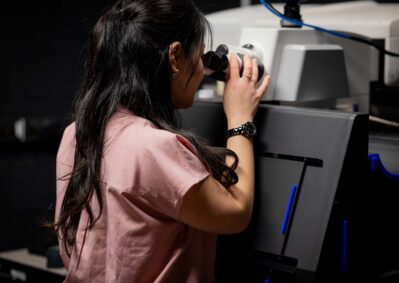
Supporting Penn inventors in overcoming these barriers has long been part of the Mack Institute’s mission. In addition to sponsoring academic research on commercialization, the Institute has for many years run the Y-Prize, where students developed commercial applications for scientists’ inventions, and the Penn–Wharton Commercialization Workshop, where scientists from the medical and engineering schools spend two days learning to translate their ideas into viable ventures.
Recently, we have expanded that focus even further. We are piloting a new MBA course, Commercialization of Academic Science (MGMT 891), which tasks students with developing go-to-market strategies for Penn inventions, as well as an AI-based app for assessing the commercialization potential of early-stage inventions.
Crucially, for the first time, the Mack Institute has begun working directly with research teams on multi-year projects that support inventors across every stage of the commercialization process. These projects foster direct partnerships that help researchers identify markets, test use cases, and build the connections needed to bring their technologies out of the lab and into the world.
“Commercialization of academic science doesn’t succeed in a vacuum. It requires a vibrant innovation ecosystem made up of diverse actors who can form a value-creating network around the inventor.”
“Commercialization of academic science doesn’t succeed in a vacuum. It requires a vibrant innovation ecosystem made up of diverse actors who can form a value-creating network around the inventor,” said Valery Yakubovich, Executive Director of the Mack Institute. “Wharton’s path-breaking research on innovation ecosystems informs the Mack Institute’s dual role: as a network node that develops go-to-market strategies and conducts customer discovery, and as an ecosystem orchestrator that brings in other value-adding partners—for example, collaborators from the School of Design for prototyping or from the School of Law for legal support.”
Teaming Up with the Center for Innovation & Precision Dentistry
That model of iterative, cross-campus collaboration led to our partnership with the Center for Innovation & Precision Dentistry (CiPD), a research center that unites scientists from Penn Dental Medicine and Penn Engineering to develop technologies that advance oral health.
“After brainstorming with Valery, we saw vast, untapped potential in dental medicine, where translating and commercializing academic discoveries still lags.” said Hyun (Michel) Koo, CiPD’s co-founder and Director, “With mounting evidence linking oral and systemic health, we can turn CiPD’s innovations into real-world solutions that reduce the burden of oral diseases and improve overall health.”
Together, the Mack Institute and CiPD launched a collaborative project to explore how nanorobot technology could transform oral health care. Developed in the labs of Professors Koo and Dr. Edward Steager, the technology uses iron oxide nanoparticles to detect and remove harmful dental plaque, combining brushing, flossing, and rinsing into one automated process that requires no manual effort from the user.
Koo believes the technology could have far-reaching impact in clinical settings, where poor oral hygiene and oral pathogens are linked to systemic complications — including cardiovascular disease, colorectal cancer, and hospital-acquired pneumonia — and in the consumer market, where it could help address persistently low brushing and flossing compliance.

To explore how to bring the product to market, an interdisciplinary team was formed, made up of Chrissie Jaruchotiratanasakul, a resident in endodontics; Hong-Huy Tran, an Engineering postdoc specializing in robotics and material science; and Manali Mahajan, a Wharton MBA student with experience in strategy and operations.
“As a materials scientist focusing on microrobotics, I gained new perspectives on what it takes to translate research into real-world impact,” said Tran, reflecting on his experience. “By including perspectives from business, engineering, and clinical practice, we were able to balance technical possibilities with market needs.”
Mahajan, who worked in enterprise SaaS before coming to Wharton, focused on evaluating market segments, developing customer personas, and shaping the sales strategy. She said the experience offered a rare, end-to-end view of deep-tech commercialization.
“Collaborating with CiPD, Penn Engineering, and the Mack Institute provided a 360-degree view of innovation,” she said. “It was rewarding to apply my product and go-to-market background to shape market strategy and customer focus while learning how technical and commercial perspectives inform one another.”
Applying A “Consultant” Model to Penn Inventions
The success of this first CiPD collaboration inspired the Mack Institute to take the project a step further, integrating it into our Fall 2024 Collaborative Innovation Program (CIP), an experiential learning course where Wharton MBA students work with real organizations to solve innovation challenges.
“We wanted to translate the complex science into language that was real and revolutionary, but not overly sci-fi.”
CIP projects typically come from corporate partners, and this project marked the first time students collaborated directly with a Penn research lab. Building on the groundwork laid by the initial team, the new group expanded upon earlier research into potential users, market positioning, and bringing the technology to market.
“We wanted to understand from the customer perspective what people really value and how those values could shape product development,” said Shiv Shukla SEAS’26, an Engineering student who worked on the project. “Was it convenience, value, or efficacy? We used those insights to inform design decisions, bridging technology and consumer perspectives.”
The student team began with preexisting data from CiPD’s quantitative surveys and qualitative interviews with clinicians and potential consumers. To build on this foundation and test a wider range of user scenarios, they created additional AI-generated personas.
“Essentially, these use retrieval-augmented generation (RAG) technology,” explained Shukla. “You input detailed descriptions—say, a 65-year-old woman living in rural Pennsylvania—and the AI responds to your questions as if it were that person. The AI responses were surprisingly consistent with our real interviews, so it became a useful bridge for customer discovery.”
Insights from both real and simulated interviews helped the team refine their product positioning. Shukla recalls brainstorming sessions where MBA students worked to translate the complex science into language that was “real and revolutionary, but not overly sci-fi.”
Passing the Baton to the Design School
The success of these student partnerships led to a new collaboration between CiPD and the Integrated Product Design (IPD) program, an interdisciplinary initiative in the School of Engineering, offered in collaboration with Design and focused on product and experience development. CiPD’s nano-robotic device served as the foundation for two projects in IPD 5520: Problem Framing, where student teams turn market research into tangible prototypes and visual concepts.

One of the teams focused on creating a prototype for in-clinic use by dentists while the other imagined how the device could be adapted for at-home use. The two teams explored different aspects of the technology. For example, the clinical team researched ways to make the device easier to integrate into existing dental workflows, moving toward an automated, “one-size-fits-all” model, whereas the at-home care team imagined how the technology could provide a safe and ergonomic experience for users with braces and those with disabilities.
“Instead of simply wrapping an object around a piece of technology, the teams fully explored the many different ways it could be used and showcased the vast potential of the invention across the oral-care space,” said Mikael Avery, one of the course instructors. “Working so closely with CiPD also meant they could quickly iterate and incorporate feedback to get closer to a feasible final project.”
At the teams’ final presentation, students passed around prototypes and visual renderings that made the technology feel suddenly tangible. The design process had taken something that once seemed like “science fiction” and made it easy to imagine in a bathroom or dentist’s office.
Sarah Rottenberg, Executive Director of the IPD Program, explained that this leap from the lab to the “everyday” is a crucial part of the commercialization process.
“Many promising technologies never reach people because they aren’t designed in ways that make sense to those who might use them,” she said. “[Design] acknowledges that while people rarely want to change how they live or work, new technologies often ask for that change. Good design on early-stage technologies can bridge that gap, making innovation feel familiar enough to be adopted while still opening the door to something new.”
Next Phases
The Mack Institute’s collaboration with CiPD continues to evolve. In our new course for MBA students, Commercialization of Academic Science, a student group is working on a new CiPD technology: a line of edible, food-grade products that fights tooth decay. The Mack Institute is also helping CiPD to develop a cross-disciplinary working group on the oral microbiome, an initiative that will explore how understanding microbiome beyond the gut could lead to breakthroughs in disease prevention and treatment.
“When people from different disciplines work together early on, they see more of the picture. Engineers focus on what’s possible, designers on how it fits people’s lives, and business thinkers on how it can sustain itself in the world. When those perspectives overlap, ideas can move faster and hold up better in the real world.”
“CiPD is pursuing a complex and ambitious research agenda whose successful implementation depends on complementary contributions from other schools,” said Valery Yakubovich. “We greatly appreciate the Center’s leadership in reaching out to us and are excited to engage our faculty and students in such impactful projects, from which we can all learn a great deal.”
“Collaborating with the Mack Institute has been transformative, and deeply rewarding as product designs, business models, and go-to-market strategies take shape around CiPD’s discoveries,” said Linda Donoho.
“The leadership and students brought exceptional passion, commitment and creativity, accelerating our progress and expanding what we believe is possible in translating these innovations into tangible, health-promoting products to everyone,” adds Koo.
Rottenberg summed up the importance of interdisciplinary work in this way:
“When people from different disciplines work together early on, they see more of the picture,” she said. “Engineers focus on what’s possible, designers on how it fits people’s lives, and business thinkers on how it can sustain itself in the world. When those perspectives overlap, ideas can move faster and hold up better in the real world.”