


On Tuesday, November 19, the Mack Institute co-hosted, along with Pennovation Works and the Penn Center for Innovation, the semester’s first installment of the Entrepreneurship Speaker Series featuring Wharton Professor Tyler Wry. His presentation, “Brace for Impact: Value Creation Beyond the Bottom Line,” explored how businesses can pursue a “hybrid model” of enterprise that balances commercial success with meaningful environmental or social impact.
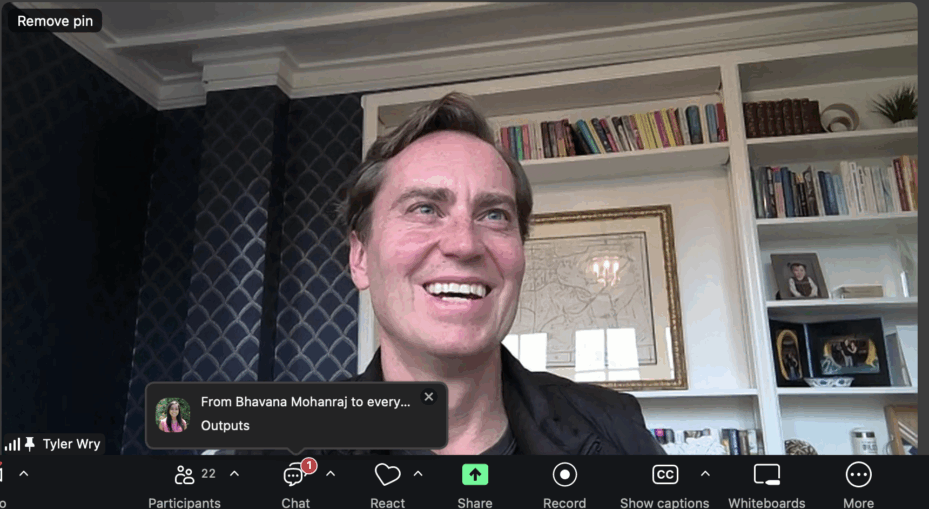
Speaking to an audience of Philadelphia entrepreneurs, Wry emphasized that a focus on “impact” is no longer reserved for mission-driven nonprofits or social ventures. Increasingly, it is becoming a standard expectation across the broader business landscape. At Penn, this trend is especially clear: more than 70 percent of Penn founders report having defined impact goals. Beyond campus, the rapid growth of B-Corp certification highlights a widespread shift toward integrating impact into core business strategy.
Four Pathways to Creating Impact
Wry cited four distinct pathways companies use to integrate social and environmental value into their model:
1. Impact Through Outputs
This is the most intuitive pathway: a company produces a good or service that directly generates social value while also driving revenue.
Penn-founded examples include The Rounds, which delivers home essentials in reusable packaging to reduce waste, and Ophelia, an online platform expanding access to opioid addiction treatment.
2. Impact Through Inputs
In this model, the product may be conventional, but the way it is produced—through responsible sourcing, ethical labor practices, or sustainable materials—creates positive impact.
Well-known examples include apparel brands Patagonia, Allbirds, and Penn’s own Cotopaxi.
3. Impact Through Operations
A venture can also create impact through its internal practices, even if its product or service is not inherently socially or environmentally beneficial.
Wry highlighted Greyston Bakery: a “regular” bakery with an inclusive hiring model that provides opportunities for people struggling to enter the workforce, such as the formerly incarcerated or those experiencing long-term unemployment.
4. Impact Through Add-Ons
This includes buy-one-give-one models popularized by brands like Bombas.
But Wry cautioned that add-on impact must be thoughtfully considered. His cautionary tale was TOMS Shoes, whose free-shoe giveaways ended up harming local economies, without evidence that lack of shoes was even a key barrier in the communities they aimed to help.
Building a Logic Model for Impact
To avoid these pitfalls, Wry emphasized the importance of measuring impact effectively. He advised entrepreneurs to start by identifying a relevant UN Sustainable Development Goal (SDG), then building a logic model that clearly links business activities to expected social outcomes. From there, founders should establish simple, meaningful KPIs that can evolve into an evidence base.
Wry closed with a framework entrepreneurs can use to assess and communicate the impact they create:
Breadth: How many people or touchpoints does your impact reach?
Depth: How much are you helping, and are you reaching those who need it most?
Additionality: What positive outcomes happen because of your organization that wouldn’t have occurred otherwise?
Risk: What’s the possibility that the intervention won’t work—or worse, might cause harm?